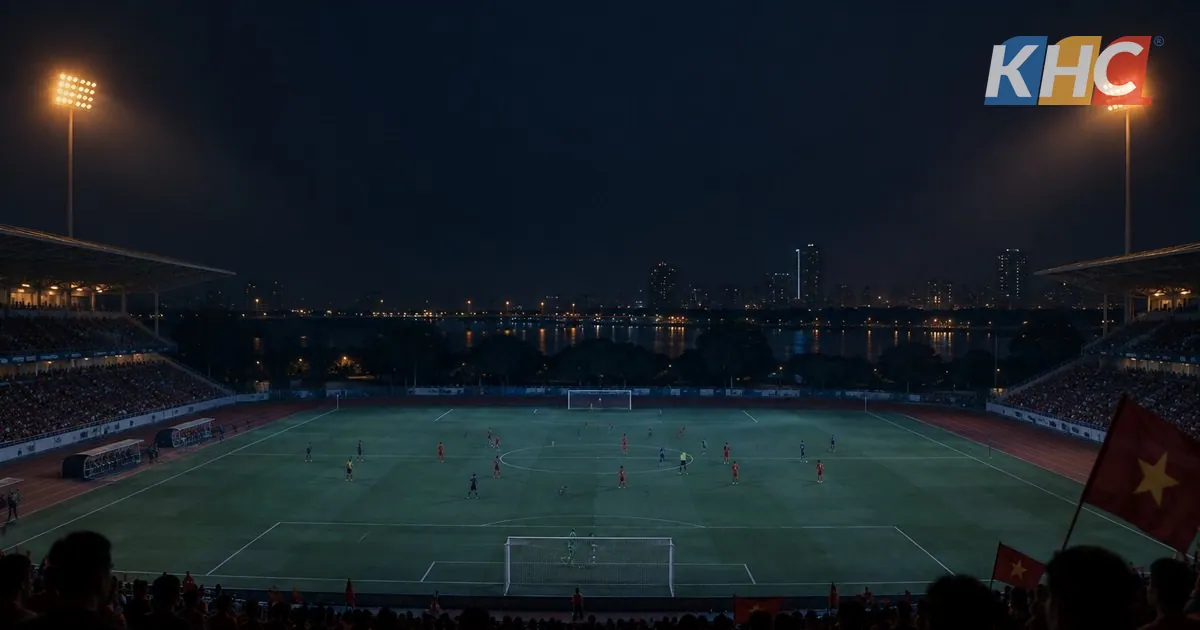
Football club sponsorship in Vietnam is usually discussed in terms of money. Product categories get far less attention. A club signs a deal, prints the logo on its shirt, and only then finds out its sponsor sits in the same category as the league's main sponsor. At that point, much of the work has to be redone.
This article lists what clubs should check before signing, and how to split sponsor rights so partners still get full value.
A lesson from the start of the 2023 V.League season
In mid-January 2023, HAGL announced a new sponsor from the energy drink category. Three days later, VPF sent an official letter asking the club not to use that brand in V.League 2023 activities. The reason was that the league also had a sponsor in the same energy drink category.
The restriction covered a wide area: pitchside advertising boards, the shirt logo, and side activities on training and match days. At the end of January, after a meeting between the two sides, VPF still asked the club to follow the earlier letter.
Each side had its own argument about when the contract was signed and when teams were notified. The takeaway is that this could have been checked while the proposal was being drafted.

Matchday rights versus rights on club-owned channels
Not every sponsor right follows the same rules. When drafting a club sponsorship proposal, split rights into two groups from the start.
Rights tied to matches
These are placements that appear within the competition: shirts, pitchside boards, interview backdrops, in-stadium activities on match days. They fall under league regulations and professional football rules. If the category overlaps with a league sponsor, restrictions are very likely.
Rights on club channels
These are assets the club owns: its fanpage, website, app, online store, membership cards and fan emails. This group is usually more flexible, but clubs should still ask the organiser in writing if content uses match footage, the league logo or the league name.
| Item | Where it appears | Under league rules | What to do before signing |
|---|---|---|---|
| Shirt logo | Matches, press photos | Yes | Check the list of exclusive categories |
| Advertising boards, LED perimeter | Stadium | Yes | Confirm which positions belong to the club and which to the league |
| Interview backdrop | Press area | Usually | Ask for the league's standard backdrop template |
| Club fanpage, website, app | Own channels | Depends on content | Do not use league images or logos without permission |
| Membership cards, store offers | Own channels | Usually not | State the duration and scope of offers |
| Data and performance reports | Sent to the sponsor | No | Agree on metrics from the start |
What a club sponsorship proposal should include
A short proposal helps sponsors decide faster. A simple order:
- Club and competition details: league name, season, home ground, expected schedule.
- The league's exclusive category list: request it in writing from the organiser and attach it.
- Rights split into two groups: matchday and own channels, noting which may be adjusted.
- How results are measured: code scans, orders, membership sign-ups, offer redemptions, instead of vague impression counts.
- A clause for conflicts: if one item is banned, which item replaces it, or how the value is adjusted.
How digital sponsorship helps when matchday rights are limited
When a stadium placement cannot be used, the sponsor still needs a reason to stay. The club's digital channels can fill that gap, if they are prepared in advance.
For example, a sponsor can back the membership programme, offer a perk when fans buy digital tickets, or run its own corner in the club's online store. Every redeemed offer leaves measurable data. The sponsor sees real people and real orders, not estimated views.
KHC builds these foundations for clubs: digital ticketing, club stores, membership cards and fan data reports. The benefit is that digital sponsor rights are tied to buying and participation, so they are easy to report and easier to renew. Anything covered by league regulations still needs to be agreed directly with the organiser.

Frequently asked questions
Can a club sign a sponsor in the same category as the league sponsor?
It can, but match-related rights such as the shirt logo and pitchside boards are likely to be restricted. Clubs should request the exclusive category list from the organiser before closing the deal.
Are rights on the club's fanpage or app restricted as well?
Own channels are usually more flexible. Still, if the content uses match footage, the league logo or the league name, the club should ask the organiser in writing.
Which metrics should be used to measure digital sponsorship?
Prioritise action-based metrics: offer redemptions, orders, membership sign-ups and code scans at the stadium. These should be agreed in the contract itself.
Conclusion
Whether football club sponsorship lasts depends a lot on preparation. Check the exclusive categories, separate matchday rights from own-channel rights, and have a fallback ready when something is restricted. Doing this early makes life easier for both the club and the sponsor.
If your club wants to build digital sponsor packages tied to tickets, stores and membership, you can contact KHC. Related reading: measuring sponsorship with real numbers instead of impressions.
A cash-plus-product structure measured with real numbers.