Free concert tickets are how many community music nights in Vietnam open their doors to large crowds. Yet every time tickets are given away, social media groups start offering "pass" tickets for a few hundred thousand to a few million dong. Fans who really want to go miss out, and people who pay for a resold ticket sometimes receive a QR code that does not work.
This article looks at how organisers can design free ticket distribution so that invitations reach the right people, and what the gate must do so that resold tickets lose their value.
Why free concert tickets end up on the black market
Free tickets carry a paradox. The price is zero, but demand is far higher than the number of places, so anyone holding a ticket is holding something of value. That gap is enough for groups to register many times and resell.
Three gaps show up again and again:
- Registration not tied to identity. One person uses several emails or phone numbers to collect several tickets.
- Tickets can change hands. A QR code is just an image, and a screenshot is all it takes to pass it on.
- The gate scans codes but does not check people. Whoever arrives first with a valid code gets in.
The third gap is where scams live. One QR code is sent to three buyers, the first one through the gate gets in, and the other two lose their money and stay outside.

Designing registration: reach the right people from the start
Most problems should be stopped at registration, not at the gate.
Tie each ticket to a real person
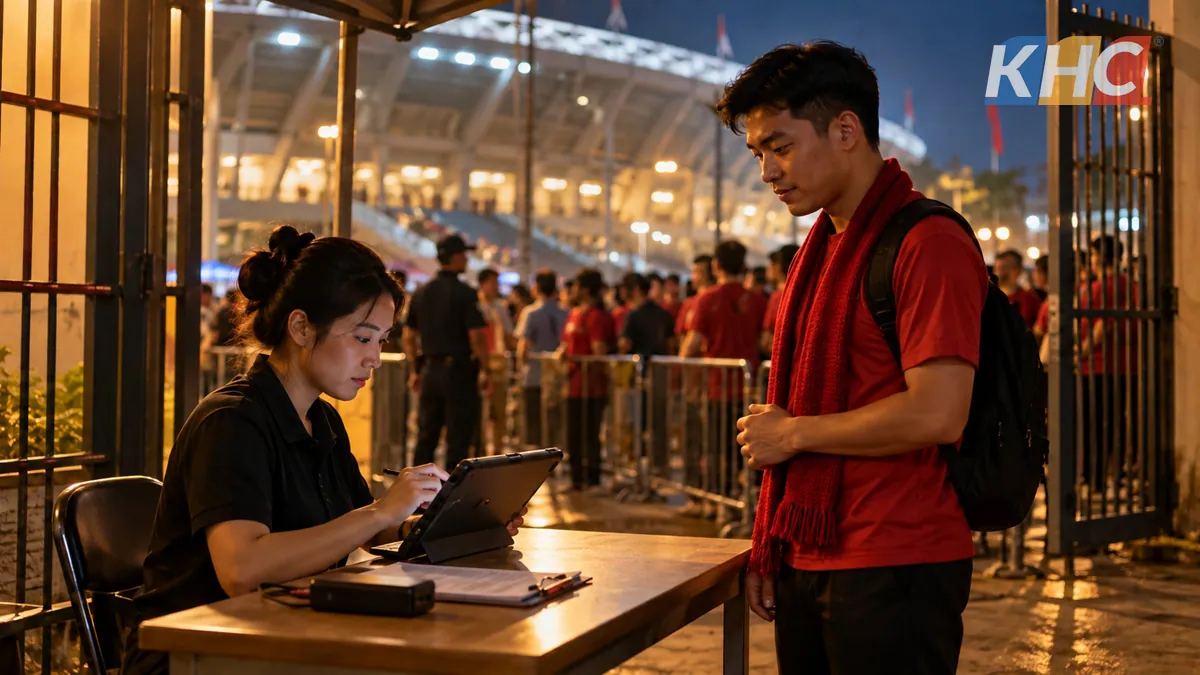
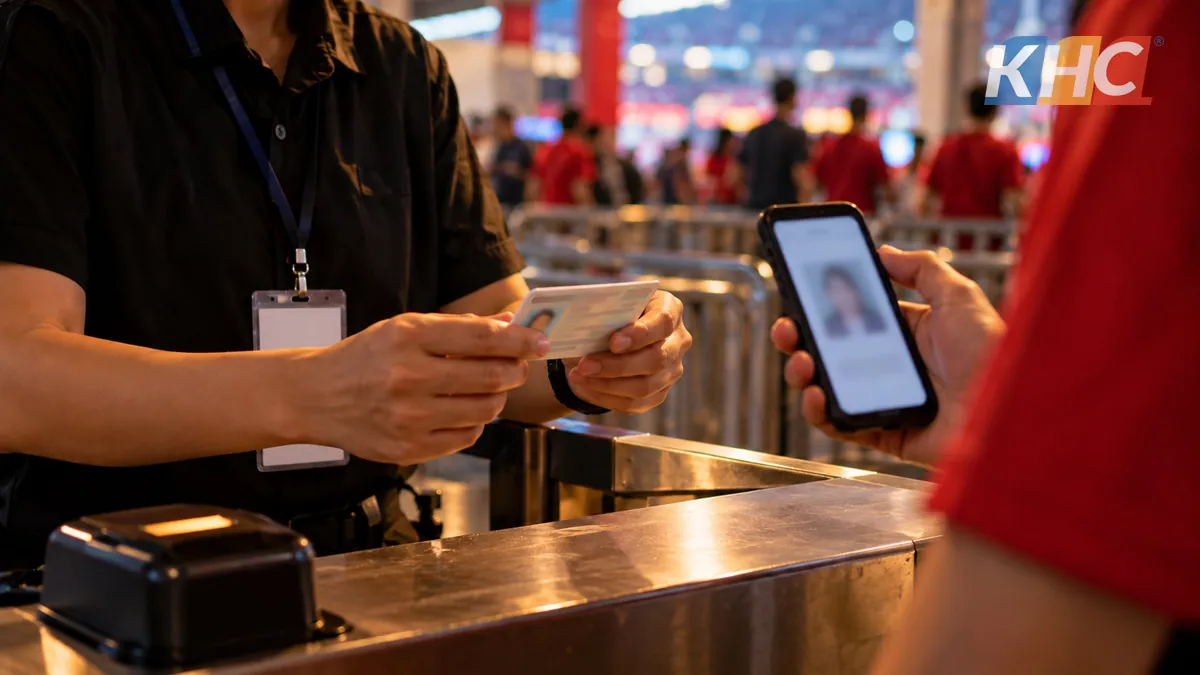
Each invitation should be linked to a full name and an ID document that the attendee brings on the day. In summer 2026, a large free concert in Ha Noi asked fans with e-tickets to bring their original citizen ID card or electronic ID to be matched at the gate. This makes resold tickets close to useless, because the name on the ticket is not the name of the person holding it.
Release in waves, not all at once
Releasing tickets in several rounds and by audience group keeps the system from being flooded in the first few minutes. It also gives organisers time to review data from the previous round, flag unusual accounts, and only then open the next one.
Limits and screening
One person, one ticket, and each ID can register only once. The system should flag patterns such as several accounts on one device, registrations a few seconds apart, or batches of newly created email addresses.
Three ways to give out free tickets and the weak point of each
| Method | Strength | Weak point | Best for |
|---|---|---|---|
| Queue to collect paper tickets | No technology needed, anyone can run it | Crowding, slow, paper tickets are easy to resell | Small events, local audiences |
| Online registration, QR ticket without a name | Fast, scales to large numbers | Codes pass between people easily, the gate cannot tell who owns the ticket | Events with low resale risk |
| Online registration, QR ticket tied to identity | Resold tickets lose value, organisers gain audience data | The gate needs an extra check and more staff | Large concerts where demand far exceeds capacity |
No method is perfect. The third takes more work at the gate, but it is the only one that removes the reason for a black market to exist.
The gate decides whether free tickets reach the right people
However good registration is, the gate is the final checkpoint. A few principles are worth keeping:
- Each code scans only once. A used code must show as used on every scanner, even when the connection is unstable.
- Match the person to the ticket. For identity-linked tickets, gate staff need a quick look at the ID, not just a green light on the device.
- Separate lanes by zone. Standing, seated and guest areas each get their own lanes so crowds do not converge on one point.
- Wristbands after entry. For fanzone areas, a one-time wristband after check-in controls movement in and out without rescanning.
- Publish ticket rules early. Fans need to know in advance that tickets are non-transferable and that mismatched tickets will be refused, so nobody buys one and finds out at the gate.
At KHC, the e-ticketing platform is built for exactly this problem: tickets are tied to the buyer, the gate app keeps working offline and flags duplicate codes across lanes. Registration data stays with the organiser after the event, so next time they know who their audience is. For the full show-day workflow, see the four show-day milestones you should never skip.
Frequently asked questions
Can free concert tickets be resold?
It depends on each organiser, but most state clearly that tickets cannot be sold or transferred. With identity-linked tickets, a holder whose name does not match can be turned away at the gate even after paying.
How can I tell if my QR ticket is genuine?
Only accept tickets through the official channel the organiser announces, and check that the ticket appears in your own account. A screenshot of a QR code from a stranger proves nothing, because the same code may have been sent to many people.
Do small organisers need identity-linked tickets?
Not every event needs them. If registrations roughly match capacity, a plain QR ticket is usually enough. When demand far exceeds capacity and resale groups have appeared, it is worth switching to named tickets.
Conclusion
Giving away free concert tickets is a good thing, but if distribution and gate checks do not line up, the people who benefit are the resellers. Tie tickets to real people, release in waves, allow one scan per code and check identity at the gate. These are four steps worth taking before registration opens.
Organisers preparing a community music night can contact KHC to work out a ticketing approach that fits their scale.
A single-event framework agreement, live straight away.