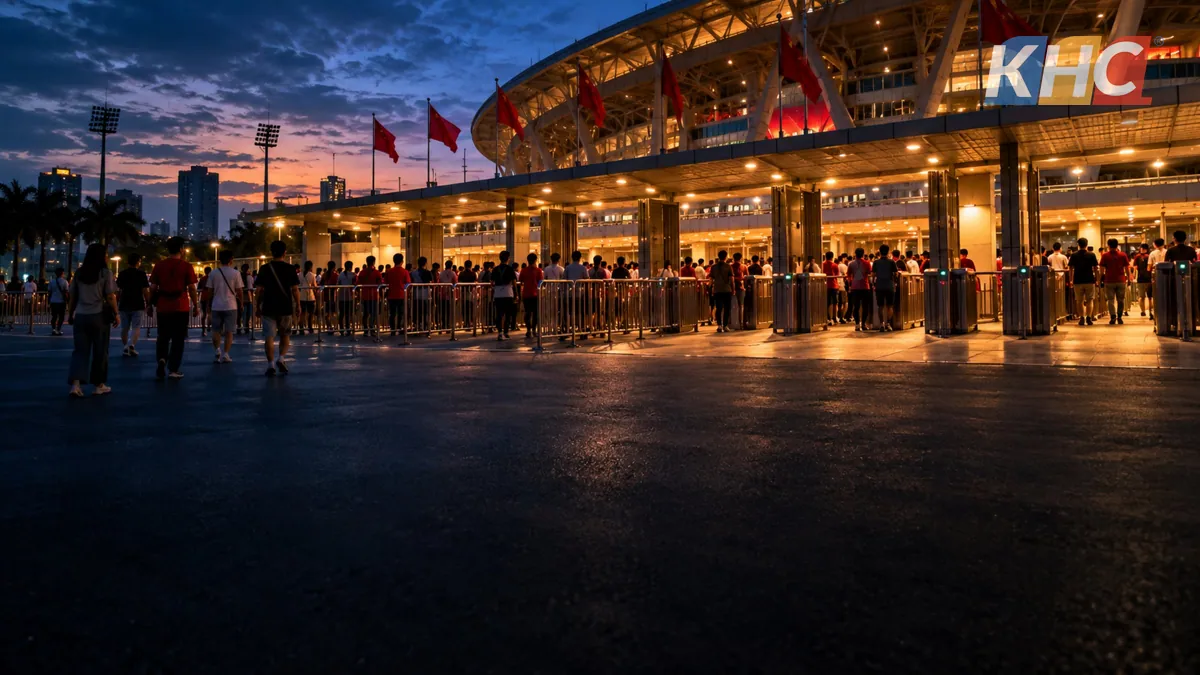
Gate check-in is the one step in a ticketing system that gets no second chance. Everything else can be corrected afterwards; at the gate every lost second stacks up into a longer queue behind it. That is why offline mode is not an advanced feature but a precondition.
Why the signal at a gate is always poor
Before the gates open, several thousand people stand in a narrow area using their phones at once. The local cell site is saturated during exactly the window when the check-in system most needs a network. Temporary event wifi hits the same wall when device counts exceed the design.
In other words this is not a rare incident to hedge against. It is a normal operating condition that has to be designed for.
How offline mode works
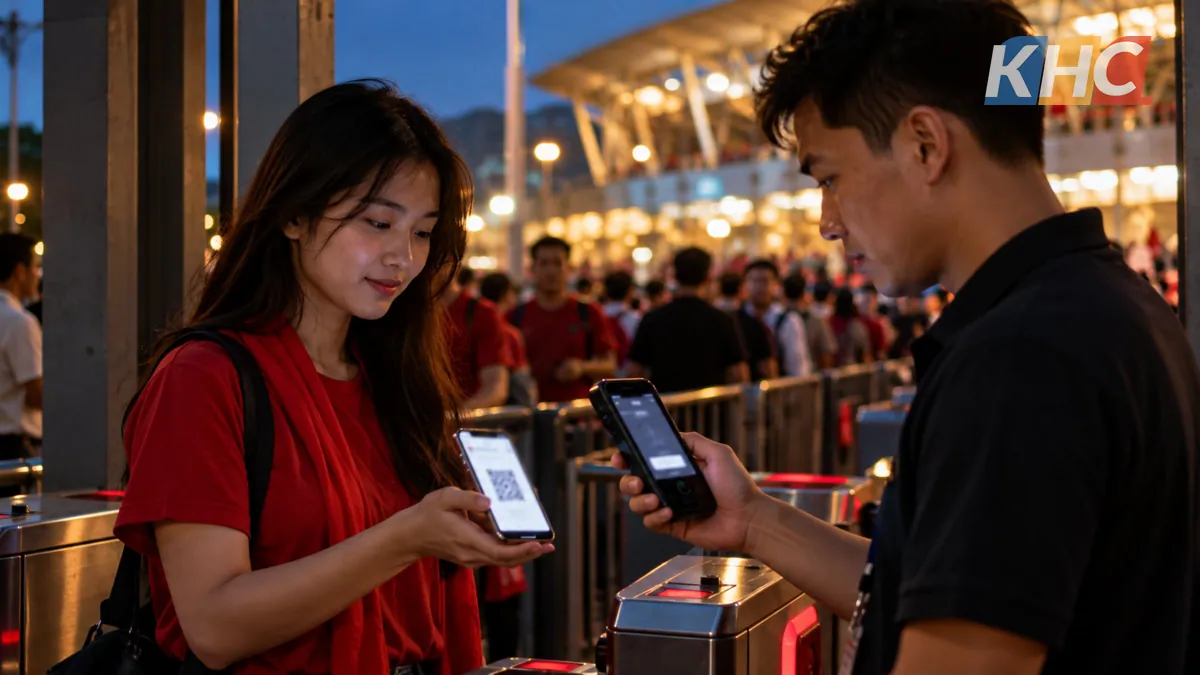
Before the gates open, each device downloads the full list of valid tickets for that event. On scan, the device validates locally and writes a log. When connectivity returns, the log syncs back.
The risk to watch is duplicate scans while offline, since devices at different gates do not yet know about each other. The practical answer is to partition gates by stand, so a ticket can only be scanned at its own group of gates.
| Situation | Handling |
|---|---|
| Full network loss | Switch to offline, keep scanning, sync later |
| One lane congested | Open a reserve lane and redirect |
| Ticket already used | Send to the exception area, never resolve in the flow |
| Ticket not found | Send to the exception area, check documents |
The three-second rule and the exception area
The most important operating rule at a gate is that hard cases are never resolved inside the flow. If a ticket does not scan within roughly three seconds, staff invite the holder to a separate exception area and the main queue continues.
Without that area, a handful of hard cases stops a whole lane. With it, the main flow keeps moving and the affected supporters are handled better, because someone is dedicated to them.

Minimum preparation for a match night
At least ten percent spare devices, one spare battery per device, and mobile data from at least two different carriers. Before the gates open, the team scans ten sample tickets covering a valid ticket, a used ticket and a non-existent ticket, to confirm all three states display correctly.
A fifteen-minute team briefing before opening is also on the required list. It is short: gate flow, exception handling, and who decides when there is a dispute.
Frequently asked questions
Does offline mode allow duplicate scans
There is a risk without gate partitioning. Once each gate group only accepts tickets for its own stand, duplication is effectively eliminated within the short window of a single fixture.
Can staff use their own phones
Yes, and it is the common approach because it avoids buying dedicated scanners. The conditions are a good enough camera, sufficient battery, and the app installed and signed in before the gates open.
What happens to the offline log after the match
Sync it in full and close the report with tickets sold, tickets admitted and exception cases. Those three numbers are the basis for reconciliation with the organiser.
Conclusion
A good check-in system is not one that demos well in a meeting room, but one that still works when the gate is busy and the signal is weak. If you are preparing an event with heavy entry volume, talk to the KHC team about the gate plan and the network-loss playbook.
See also solutions for events and concerts.
QR tickets, gate scanning and same-night reconciliation.