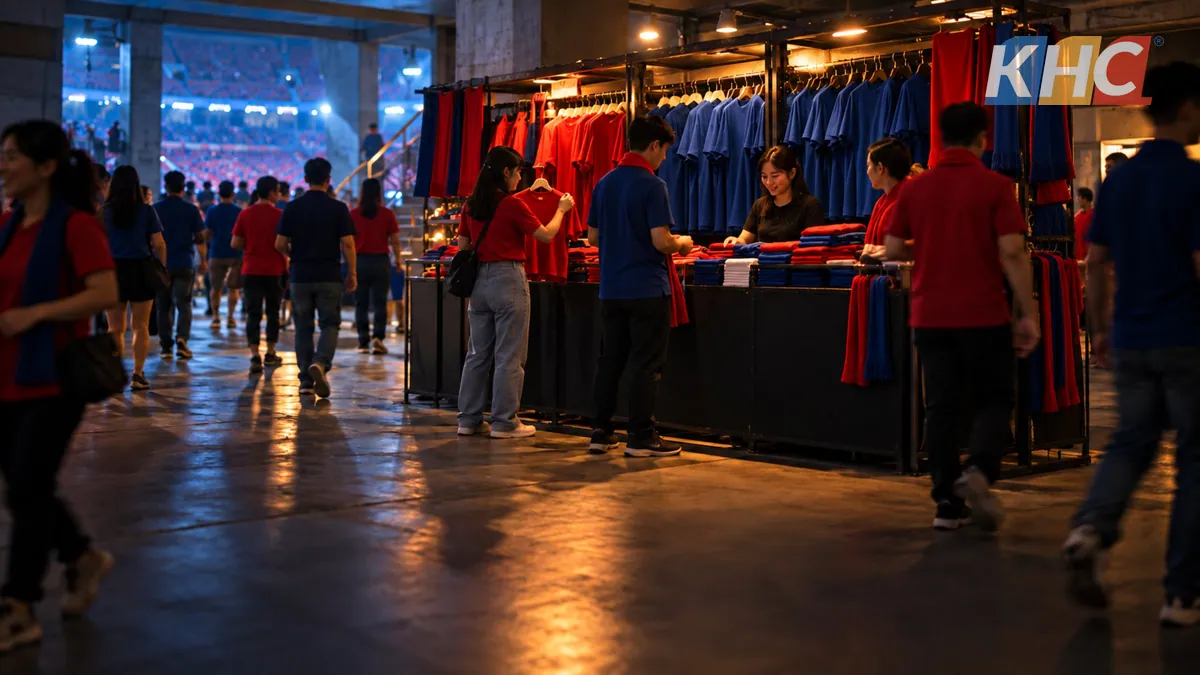
A club store that holds no stock lets a club open an official sales channel without tying up capital in inventory. Goods stay in the supplier's warehouse, the club fronts the storefront and takes a share of each order, and packing and delivery sit with the supplier and a logistics partner.

Why holding stock usually fails
A club buys a batch of shirts, sells most of it in the first two months, and the remainder sits until the season ends. Capital is stuck in inventory, storage is occupied, and next season the old design is hard to move.
The deeper issue is that a club is not a retailer. Demand forecasting, size management, returns and after-sales care are all distinct disciplines needing dedicated people, while club staff are already fully occupied with sport.
Who does what in the model
| Party | Responsibility |
|---|---|
| Club | Fronts the storefront, approves products, promotes to supporters |
| Supplier | Holds stock, publishes real inventory, packs, warranties |
| Logistics partner | Collects from the supplier warehouse and delivers |
| KHC | Runs the platform, reconciles orders and cash, reports |
The critical condition is that the stock shown on the storefront is the supplier's real, continuously updated stock. Selling an item that is out of stock is the fastest way to lose supporter trust.
Choosing what to sell
Not every product fits. Three groups work in practice: established sellers with familiar brands, good-margin lines that cover operating cost, and gift items used as match-day game prizes.
The catalogue should start narrow. Five carefully chosen items outsell fifty scattered ones, because supporters arrive with a clear intent to buy rather than to browse.

Match day is sales day
The largest difference between a club store and an ordinary online shop is rhythm. Demand is not even; it clusters around match day, especially the twenty-four hours before kickoff and the moments after a win.
Campaign calendars should therefore follow the fixture list rather than the calendar month. Discount codes tied to stadium check-in, real products as match-day game prizes, and well-timed notifications all draw on the same match-day data.
Frequently asked questions
Does the club need upfront capital
No, and that is the point of the model. The club buys no stock, holds no warehouse and carries no inventory risk.
Who handles returns and warranty
The supplier is responsible for the product, while requests are raised through the platform so the club can track them. Specific terms sit in the three-party contract.
How is revenue shared
The split is agreed per product group and written into the contract, since it depends on supplier margin and real operating cost. A fixed share per order can be directed to a youth development fund if the club wishes.
Conclusion
A store without stock is how a club opens a new revenue line without taking on retail risk. The part that needs most care is not technology but choosing the right supplier and the right catalogue. If the club wants to try one season, book a conversation with the KHC team.
See also solutions for sponsors, manufacturers and distributors.
KHC builds the storefront, onboards suppliers and runs fulfilment.