Fan commerce is the practice of reorganising every touchpoint between a club and its supporters into a single system, so that each ticket, each entry and each purchase leaves behind usable data. At most Vietnamese clubs today the crowd is still anonymous: tickets sell, but nobody knows who bought them; shirts sell, but nobody knows whether those buyers ever attend.
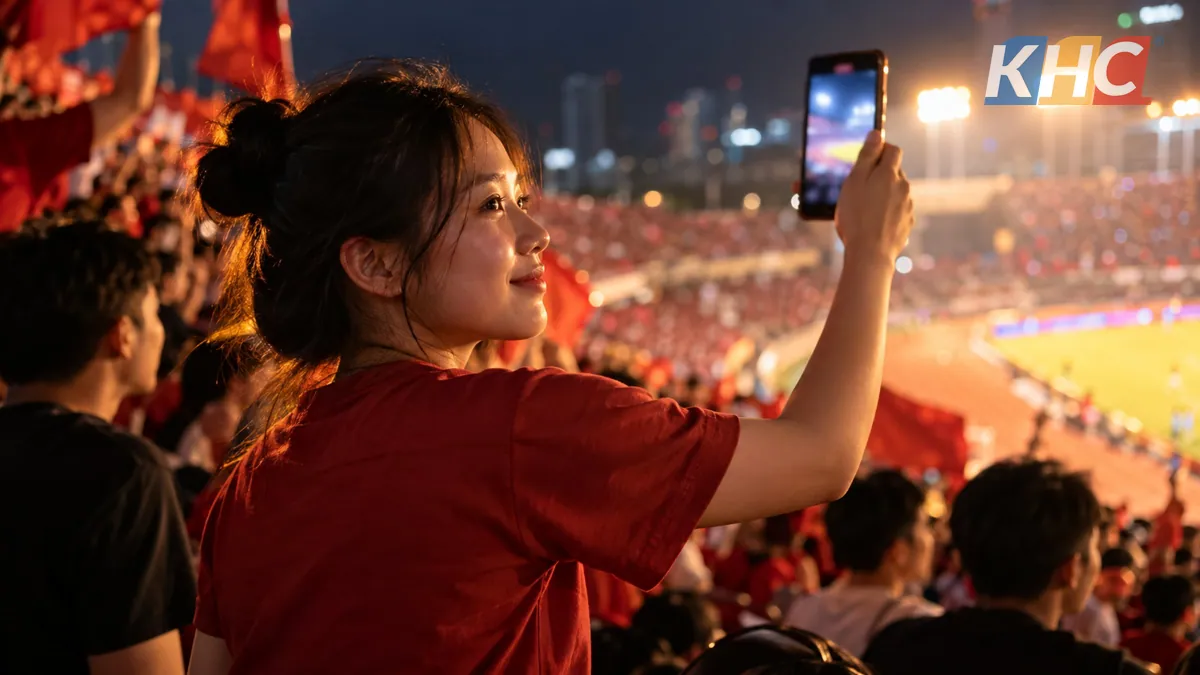
The problem is not the size of the crowd
Plenty of clubs have large social followings and thin commercial revenue. The cause is not a lack of interest but the fact that touchpoints sit in separate places. Tickets go through agents, merchandise through a counter, membership through a spreadsheet, and engagement through somebody else's platform.
When those four streams never meet, the club loses the ability to answer the simplest questions. Who buys a ticket every season. Who bought a shirt but has never attended. Which group responds to which offer.
What fan commerce is made of
A complete system has four layers. Identity comes first: one account per supporter. Transactions come second: tickets, merchandise and match-day services share one payment flow. Engagement comes third: match-day games, loyalty, offers. Reporting sits on top, where the first three layers resolve into one set of numbers.
| Layer | What is lost without it |
|---|---|
| Identity | Behaviour cannot be linked across repeat purchases |
| Transactions | Revenue cannot be attributed to an audience segment |
| Engagement | No reason for supporters to return between fixtures |
| Reporting | No evidence to bring to a sponsorship negotiation |

Why the order of deployment matters
Many organisations start with an online store because it is the easiest part to picture. A store built before the identity layer sells a handful of orders and then stalls, because no steady flow of people walks into it.
The durable order starts with ticketing. A ticket is the one thing a supporter must buy, and the moment they are most willing to create an account. Once the identity layer has thickened over several home fixtures, the store has a real customer base and sponsors have a real audience to reach.
What sponsors get from the model
A traditional package sells placement, and at renewal both sides argue from impressions. With a data layer, the package sells something else: real reach, orders generated, buyer geography, conversion per campaign.
That is why clubs running fan commerce tend to sell sponsorship at better terms, not because the brand grew stronger, but because the buyer can see what they are buying.
Frequently asked questions
Can a smaller club run fan commerce
Yes, and often more easily than a large one, because there is less legacy to unpick. What matters is a fixed home ground and a regular fixture list, not crowd size.
How much does it take to start
The figure depends on audience size, number of home fixtures and current ticketing practice, so KHC surveys the current state first and then builds a model for that club. One option carries no upfront cost.
Who owns the supporter data
The club does. KHC writes this into the contract, together with the handover terms at the end of the engagement.
Conclusion
Fan commerce is not a piece of software; it is a way of arranging existing touchpoints so that they generate data. A club that starts early has a working dataset by next season instead of starting from nothing. If this is on the agenda, book a survey of where the club stands today.
See also solutions for clubs and community owners.
KHC surveys the club, then builds a revenue model for it.